

O guia definitivo de treinamento para filhotes:101 dicas, livros e produtos de especialistas
Treinar um novo cachorrinho pode ser um processo extremamente difícil. Entre o treinamento doméstico e o treinamento comportamental, um novo cachorrinho é muito parecido com um trabalho de tempo integral. Quando você combina esse trabalho com seu trabalho real trabalho, você pode precisar urgentemente de alguns atalhos. Sem mencionar o quão mais difícil o processo pode ser se o seu novo cão tiver algum tipo de trauma passado que o torne atípico – mesmo algo aparentemente tão simples como uma personalidade particularmente teimosa pode complicar as coisas.
Se você está lutando para treinar seu filhote para se adaptar à sua casa e ao seu estilo de vida, você está no lugar certo. Compilamos uma lista de 101 dicas e truques para treinar seu filhote, cobrindo tudo, desde arrombamento doméstico até treinamento de obediência, treinamento em caixas e blocos de treinamento para filhotes, bem como links para os principais vídeos de treinamento, guias, produtos e tudo que você precisa para que seu novo filhote se adapte bem ao seu estilo de vida e rotina.
Filhote de cachorro treinando potty





Confira estes recursos e produtos para treinar seu filhote com o penico:
- Como domesticar seu cachorro em 7 dias (revisado)
- Treinando seu cachorro em casa
- Guia definitivo para treinar seu filhote em casa
- Caldwell’s Pet Supply Co. Potty Bells Housetraining Dog Campainhas
- Treinamento de filhotes:como domesticar seu filhote em apenas 7 dias!
- Bandeja de treinamento para banheiro com penico para cachorro PUPPYPRO
- Guia completo de TREINAMENTO DE POTTY PARA FILHOTES DE CACHORRO
- Campainhas Zacro Dog para treinamento de cães e 1 Clicker de treinamento
- Aprendendo a ouvir
Crate treinando um cachorrinho

Confira nossas listas das melhores caixas para cães pequenos e das melhores caixas para cães grandes para encontrar a caixa perfeita para o seu cachorro.


Confira estes recursos e produtos para treinar seu filhote na caixa:
- Treinamento na caixa para filhotes:Treinamento para filhotes Iams®
- Treinamento em caixa
- Como treinar um cachorrinho na caixa
- Guia de treinamento da caixa positiva da Karen Pryor Academy
- Crate Training Cesar Milan Dog Whisper
- Como treinar seu filhote na caixa!
- Crate treinando seu cachorro ou cachorrinho
- E-book de treinamento em caixa
- Treinamento em caixas:um manual de A a Z sobre como treinar um filhote em caixas, treinar cães em caixas, cronograma de treinamento em caixas e muito mais
- Como treinar seu filhote na caixa
- Treinamento de cães:um guia passo a passo para treinamento com coleira, treinamento em caixas, treinamento com penico, obediência e treinamento comportamental (livros sobre treinamento de cães) (Volume 1)
Treinamento de obediência de filhotes

Check out our list of the Best Dog Training Collars to find the perfect training collar for your puppy.
48. Give plenty of affection. “Most people don’t have a problem being very clear about when they are unhappy with their dogs, but, they often ignore the good stuff. Big mistake! Make sure you give your dog lots of attention when he’s doing the right thing. Let him know when he’s been a good boy. That’s the time to be extra generous with your attention and praise. It’s even okay to be a little over the top.” – Traci Theis and Kellyann Conway, Top Ten Dog Training Tips, Pet Finder; Twitter: @petfinder

49. But don’t overwhelm the puppy. “Your new puppy has just been taken away from her mom and littermates. She is vulnerable and impressionable. What she needs now is security and routine. Play with her quietly and gently. Don’t flood her with attention and activity. If she looks like she wants to sleep, leave her alone. Puppies need lots of sleep.” – Training Puppy the First Week, Perfect Paws
50. Know your dog’s personality. “Intuitively, we all know that our dogs are like no others. They react hilariously to the most benign and everyday of sounds, or they sleep on their backs trying to copy the humans they watch daily. But, it’s not uncommon to totally forget how unique our dogs are when it comes time to do some training. Fittingly, despite some opinions to the contrary, there is no one holy grail method of training. Get to know your dog’s personality and you’ll have the keys to effective training sessions.” – Rosalee Kaschel, How Your Dog’s Personality Affects Training , PetSafe; Twitter: @PetSafe
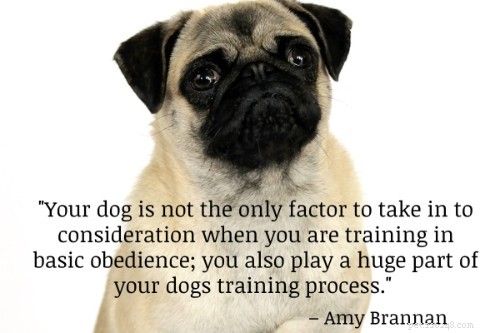
51. Factor in you , too. “Your dog is not the only factor to take in to consideration when you are training in basic obedience; you also play a huge part of your dogs training process. If you are considerably impatient or easily frustrated then you are going to want to approach teaching your dog obedience in short lessons that focus on one command at a time. You can also benefit from enrolling in a small obedience class that will allow you a reprieve if you are feeling overwhelmed.” – Amy Brannan, Dog Obedience Tips:Patience Is Key , Canine Journal; Twitter: @CanineJournal
52. Train yourself. “Most owners mistakenly believed they need to have their dogs trained when in fact the owners need the education more than the dog do. The most important component in any successful relationship between dog and owner is that the owner understands the dog and that the dog understands the owner.” – Matthew Kinneman, Puppy Obedience Training Tips The Top Ten Mistakes Owners Make , Vitamins For Pitbulls; Twitter: @bullymax

53. Start at home. “The best place to start puppy obedience training is at your home, where you don’t have distractions and where your puppy is familiar, so we can avoid the environmental stress factor that happens when a dog is in a new and unfamiliar place. Remember your puppy is in the learning phase, later on during our next steps we will add different stress factors and distractions.” – Mario Ancic, Puppy Obedience Training…Where It All Begins , Training Your Dog and You
54. Remember your dog wants to please you. “Understanding more about how a dog thinks and what is ‘normal’ for your dog will help you. It is important to remember that, for the most part, our dogs are keen to please – so if they are not doing as you ask, it may be because you are not being clear about what you want or are not using rewards, commands and body language in a way your dog understands.” – Dog Obedience Training, Purina; Twitter: @Purina
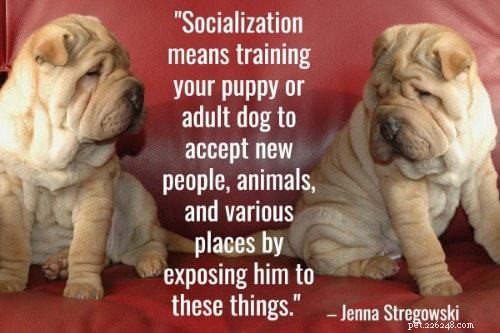
55. Socialize your puppy early. “Socialization means training your puppy or adult dog to accept new people, animals, and various places by exposing him to these things. Socialized dogs are less likely to develop behavior problems and are generally more welcomed by others. Socialization can also help prevent the development of fears and phobias. The bottom line is that socializing your dog or puppy will make him a happier, more well-behaved dog.” – Jenna Stregowski, 10 Steps To Train Your Dog , The Spruce Pets; Twitter: @JennaDogs
56. Start with basic commands. “To start, force yourself to slow down and focus on one command at a time with the plan to work through all of the basics, which include:sit, stay, heel, down, kennel and place.” – Tom Dokken, 4 Tips for Dog Obedience Training , Gun Dog; Twitter: @GunDogMag
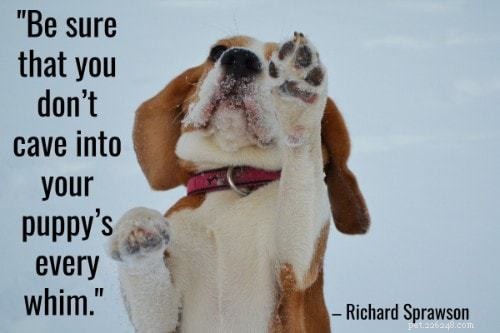
57. Stay firm. “This is where you learn how to show your dog that you are the one in charge, that you are the alpha leader and that you are the person they need to listen to you. This will make training your puppy a lot easier. As your puppy grows, so will his need to assert himself. Be sure that you don’t cave into your puppy’s every whim.” – Richard Sprawson, Beagle Puppy Obedience Training Tips And Methods , Beagles In My Kitchen; Twitter: @rgs112
58. Não existem atalhos. “Be careful of advertisements for 10 minute puppy obedience training programs and the like. There are no miracle cures in puppy training.” – Puppy Obedience Training – How to Care for a Puppy , Shiba Shake
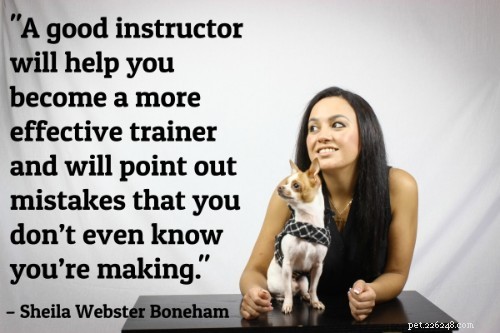
59.Consider enrolling in a good obedience class. “A class environment provides for some of the socialization your dog needs and teaches him to respond to you even with exciting distractions all around. A good instructor will help you become a more effective trainer and will point out mistakes that you don’t even know you’re making.” – Sheila Webster Boneham, How to Find a Good Dog Trainer and Obedience Class, Nylabone; Twitter: @nylabone
60. Mentally prepare for the bad days. “Not every training day is going to be perfect, but don’t get frustrated and don’t take it out on your dog. Adjust your own behavior and attitude to encourage your dog’s ability and confidence to learn. If you have a calm mood, generally your dog will, too. If the dog becomes afraid of your bad mood, he will not learn anything new. He’ll only learn to be wary and not trust you.” – How to Train a Dog , WikiHow; Twitter: @wikiHow
Check Out These Resources and Products for Puppy Obedience Training:
- Obedience Training for Dogs
- Dog Obedience:Getting Your Pooch Off the Couch and Other Dog Training Tips
- How to teach ANY dog to Come when called!
- Obedience Schools Near Me
- Introduction to Dog Training
- How To Teach Any Dog PERFECT Obedience! (Sit,Down,Stand)
- How to Stop the 10 Most Common Dog Obedience Problems
- The Power of Positive Reinforcement:The Key to Unleashing Your Dog’s True Potential
- Dog Training Academy:Obedience Training For Dogs
- What’s Good About Dog Training EBooks?
- Puppy training:Train your puppy in obedience, potty training and leash training in record time
- Zak George’s Dog Training Revolution:The Complete Guide to Raising the Perfect Pet with Love
- BKLN Manners:Positive Training Solutions for Your Unruly Urban Dog
- Pet Botanics Training Reward
- Dog Treat Bag –Training Pouch for Small and Large Dogs with Clicker and Collapsible Food Bowl
Leash Training a Puppy

61. Make a connection first. “If we had just met and you wanted to take a walk with me, how comfortable would we be together at first? We most likely would be a bit guarded with one another until we knew each other better. The same is true for a relationship between a dog and their human. […] Get to know your dog and let him get to know you, too. Work on reinforcing eye contact every time you say his name – which is most likely a brand new name for your dog. Say the name or make a noise to get his attention, and when he looks at you, say YES! and toss him a good treat. Eye contact and acknowledgement that you are seeking his attention is the first step of all training, so you really can’t do too much of this.” – Annie Phenix, How to Train Your Dog to Walk Nicely On Leash , Lucky Puppy Magazine; Twitter: @myluckypuppy
62. Leash training is a critical part of maintaining your dog’s safety and promoting your bond. “Learning how to walk properly on leash makes it safer for your pet and more enjoyable for both of you (ever seen someone fighting to keep their leashed dog under control, while it drags them relentlessly down the street? Doesn’t look like much fun…). Remember that cute little balls of fluff are still very young and their attention span can be short, so patience is a must when it comes to leash training your puppy. Positive reinforcement is important – reward your puppy for every little thing he does right during your puppy training sessions.” – Puppy Leash Training Tips , Scampering Paws
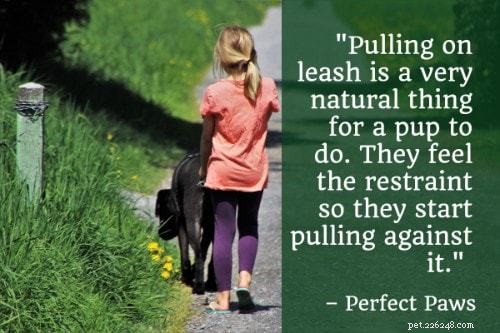
63. Give it a few trial runs before going outside. “Pulling on leash is a very natural thing for a pup to do. They feel the restraint so they start pulling against it. Let’s start the puppy leash training indoors with no distractions. Accustom the puppy to walking on a loose leash at your side. It’s important that you teach your puppy to walk on one side only. The standard is your left hand side. It really doesn’t matter which side, but choose only one and stick with it – this way your puppy won’t be tripping you up by changing sides.” – Puppy Pulling On Leash, Perfect Paws
64. Make sure your dog associates fun things with the leash. “Fill an – Fanna Easter, What to Do When Your Puppy Won’t Walk on Leash , Dog Training Nation; Twitter: @DogTrainNation
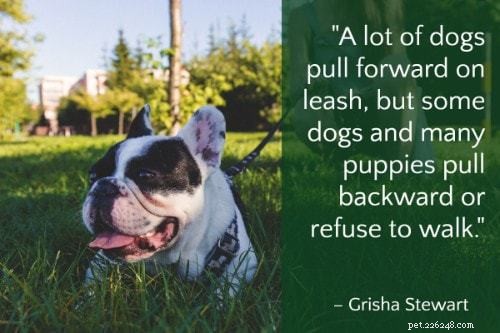
65. Your dog may be extra stubborn. “A lot of dogs pull forward on leash, but some dogs and many puppies pull backward or refuse to walk. This happens to French Bulldogs and English Bulldogs all the time! Pulling harder or luring with a treat only makes the problem worse.” – Grisha Stewart, What to Do When a Dog Refuses to Walk , Ahimsa Dog Training; Twitter: @grishastewart
66. For dogs who pull back or away, stay away from retractable leashes. “When Sunshine [the dog] pulls on the leash it doesn’t make the walk enjoyable for her guardians or the dog. The guardians had used a retractable leash, which allows Sunshine a lot of freedom. But if you have a dog that is not well behaved on the leash this additional amount of freedom can contribute to the problem. If your child is not the best driver, you wouldn’t to give it more unsupervised driving privileges; you would go back to basics and have the child practice more in a structured environment to build up the skills necessary to be a good driver. This same principal applies to your dog walking on the leash.” – Sam Kanouse, Great Leash Training Tips to Stop a Golden Retriever Puppy from Pulling on the Leash , Dog Gone Problems; Twitter: @DogGoneProblems
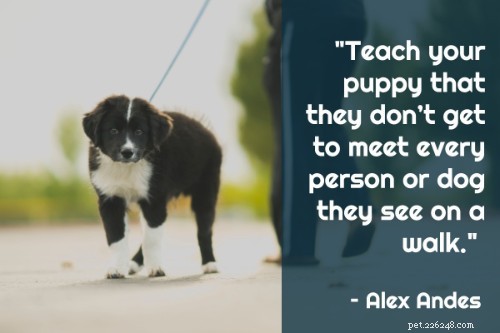
67. You must teach your puppy he can’t meet everyone. “Teach your puppy that they don’t get to meet every person or dog they see on a walk. I cannot emphasize the importance of this enough. Leash reactivity (barking, lunging, growling on leash) is the most common behavior problem I work with. In the majority of cases, it results from the dog’s frustration with being unable to get to the other dog.If we teach puppies from a very young age that walks are structured, require focus on the owner, and aren’t a social hour, it can help your puppy grow up to have reasonable expectations when seeing another dog on leash. Even with ‘social butterfly’ puppies, we don’t greet every dog we pass. When we do greet a dog or person, I teach them to sit and make eye contact with the person walking them before they are released for a brief greeting. This type of structure is critically important in order to have a dog that’s friendly and social – but also has self-control.” – Alex Andes, 5 Little-Known Puppy Training Tips You’ll Be Glad You Found , Peach on a Leash
68. Remain Calm. “Try to start all walks in a relaxed state. Often dogs get very excited to see a leash. They know it possibly means they’ll be allowed to go out and explore. Introduce the leash when your dog is calm and keep a relaxed attitude yourself throughout the entirety of your walk” – Napa ‘ze Dog, Tips for Leash Training a Puppy , Napa’s Daily Growl; Twitter: @NapatheDog

69. Use the proper gear. “Practice with a 6-foot regular leash that is long enough to create some slack. Always use a flat buckle collar or harness. No choke chains, prong collars, and definitely no shock collars.” – Sharon Dianora, Leash Training a Puppy To Walk Calmly , Dog Care Knowledge; Twitter: @Dogcareknow
70. Let him hit the jackpot! “Remain calm at all times, and utilize jackpots (more treats or better treats) when your dog accomplishes something that was difficult for him; i.e., not pulling you toward the neighbor dog! Jackpot for any eye contact or focus on you! Keep leash training sessions short and FUN! You can train several times a day, but you don’t want to push you or your dog past the point of fun! Puppies, especially, have short little attention spans, and if you insist on puppy training past the point of fun – usually around five minutes – your pup may start to dislike, and dread training!” – Leash Training Tips To Stop The Pulling And Enjoy Your Walks Again , The Dog Training Secret; Twitter: @DogTrainer411
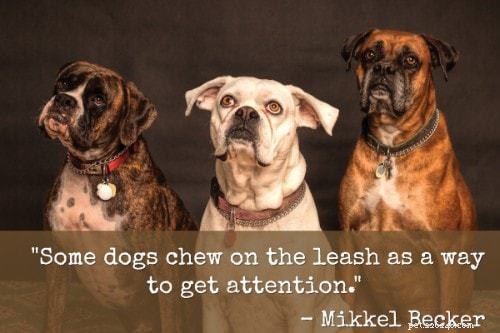
71. If he’s chewing on his leash, he may be over stimulated or desperate for attention. “Some dogs chew on the leash as a way to get attention. When your dog is walking calmly on a loose leash, no one pays attention to him, but when he acts out, the focus shifts directly to him. For many dogs, negative attention is better than no attention at all. Other dogs are over-aroused, and the easiest way to release tension is to bite on the leash. In the shelter situation, dogs frequently grab and chew on the leash, often when first taken out of the kennel and led with other dogs. The more intense the situation and the more wound up a dog is, the more likely that leash biting will occur.” – Mikkel Becker, Put a Stop to Leash Chewing and Tugging, Vet Street; Twitter: @Vetstreet
72. Not all dogs get the same gear. “A front-attachment harness is a safe and easy to use no-pull device that is great for all dogs. Choose a head collar for dogs with aggressive tendencies or for those that need the maximum amount of control such as a small owner with giant-breed dog. The front-attachment harness and head collar should only be used with leashes that are a maximum of six feet long. If the leash is too long, it is possible that he could get going fast enough to hurt himself if he were to hit the end of the leash abruptly.” – Jessica Rollins, Leash Training:How to Walk a Dog That Pulls , Pet Expertise; Twitter: @PetExpertise

73. Even if it’s worked in the past; that doesn’t mean that’s the method you should stick with. Some puppies are more resilient than others and can learn to walk on a leash despite the method. “My general rule of thumb is that we should use methods that focus on rewarding the correct behavior, starting with steps the dog can easily perform and quickly moving on to steps that are closer and closer to our goal behavior; rather than methods that rely on sheer luck that the type of dog you selected can endure it mentally unscathed. And if we choose methods that are as crude as dental care in the 16th century, we should realize that some dogs learn no matter what we do to mess them up.” – Dr. Sophia Yin, My Puppy Won’t Walk on Leash! 3 Ways to Train Your Puppy to Love Her Leash , Cattledog Publishing, the Legacy of Dr. Sophia Lin; Twitter: @SophiaYin
74. Treat well and treat frequently. “Keep your dog’s leash short enough that he cannot easily leave your side, thereby modeling the position you want him to be in. Don’t keep it so short that you’re dragging him, though. Simultaneously lure him into the correct area by your side with tiny treats. You can mark the behavior with a word or clicker if you like. When he starts to get the idea, stop luring but do reward him for staying by your side. Give a treat every few steps at first, increasing the distance you walk between treats until he forms the habit of walking at your side without treats. You can also give him a bit more leash as long as he doesn’t weave or circle.” – Teaching Your Dog to Walk on a Leash , Nylabone; Twitter: @nylabone
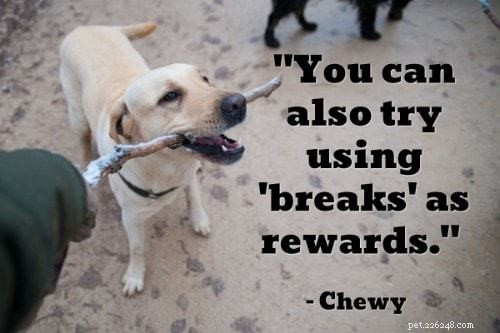
75. Rewards are more than just treats. “You can also try using ‘breaks’ as rewards. For instance, if (or, more likely, when!) he wants to sniff around, ‘Ask for a sit or eye contact first, then let him sniff and ‘be free’ for a bit, before walking nicely again,’ advises Mayer.” – How to Leash Train a Dog , Chewy; Twitter: @Chewy
76. Don’t start to early and don’t skip the home training. “I recommend waiting until they’re 10 weeks old. This is because until 12 weeks old, they’ve no need for ID tags as they’re just too young to take outside further than your back yard while they complete their vaccination program. And during house training you don’t need to lead them outside, they’re so small at this age that you can simply scoop them up and carry them. But by getting them used to a collar and leash at 10 weeks old, they will be comfortable wearing them by 12 weeks when you can start to walk them outside.” – LTHQ, How To Get Your Puppy Used To A Collar And Leash , Labrador Training HQ; Twitter: @LabTrainingHQ
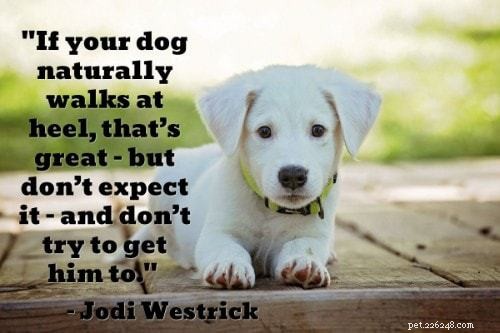
77. Get down to his level. “If your dog naturally walks at heel, that’s great – but don’t expect it – and don’t try to get him to. Yanking on the leash won’t help the situation, so think of getting him to walk as a gradual process. You may need to stand still or kneel down while he figures out what’s going on – that way your pup realizes that he won’t be able to go anywhere unless it is by your side. Some dogs may decide to sit down and not move. If this happens, call to your pup and offer him a reward when he comes over. Never yank him toward you. Once he comes over of his own will, offer him a treat and continue walking with him by your side.” – Jodi Westrick, How to Leash Train Your Active Puppy , Animal Planet; Twitter: @AnimalPlanet
78. Imposing penalties. “Here’s a terrific exercise. Set up a goal for your dog – it could be a biscuit on the ground, or a person she adores. With your dog on leash, take a step toward her goal. The instant she draws forward and tightens the leash, say, ‘Oops!’ and go right back to the starting point. Repeat, repeat, repeat, imposing penalty yards whenever your dog draws the leash tight. I did mention you’d need patience, didn’t I? Help your dog succeed by delivering treats as she keeps the leash loose on the way to the goal.” – Jolanta Benal, Teach Your Dog to Stop Pulling the Leash , Quick and Dirty Tips; Twitter: @quickdirtytips
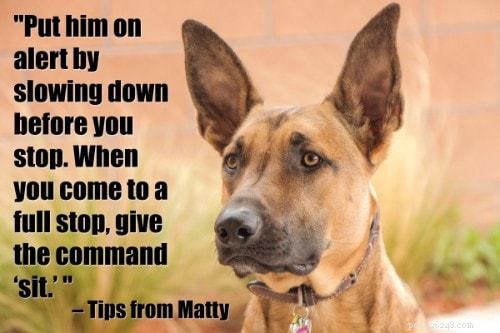
79. Don’t forget to teach him to sit at your side when you stop. “The procedure for teaching your dog to automatically sit when you stop walking is a simple one. Put him on alert by slowing down before you stop. When you come to a full stop, give the command ‘sit.’ If necessary, slowly pull us on the leash and push down on his haunches. […] When he does sit, praise him for obeying. Eventually, it will not be necessary to use the ‘sit’ command.” – Tips from Matty, Teaching your Dog to Heel and Sit , PBS; Twitter: @PBS
80. Repeat, repeat, repeat – and you’ll get it. “To make sure that your canine has the leash and collar routine down pat, you need to repeat this training in many different settings, and at many different places. Fortunately, leash training isn’t the most difficult dog training trick you’ll have to teach your dog, and it’s fairly easy to get ahold of this. You can even combine leash training with ‘stranger’ training. Just make sure you do them separately in the your home first.” – Samantha Randall, 3 Tips to Effectively Leash Train Your Dog , Daily Treat; Twitter: @RoverDotCom
Check Out These Resources and Products for Leash Training Your Puppy:
- How to Leash Train a Puppy:Iams® Puppy Training
- Little Dog – Leash Walking
- Leash Training
- How to Train Your Dog to NOT PULL on the Leash!
- Managing a leash-reactive dog
- 10 Quick Tips for Leash Training Your Dog
- The Best Collars and Leashes for Puppies and Dogs
- How to Give Your Dog a Good Leash on Life
- DOGS UNLEASHED:From On-Leash To Off-Leash:Complete Leash Training for Dog Lovers (New Dog Series)
- Puppy Leash Training Instruction:How to Train a Puppy to Walk On a Leash
- Dog Training:Leash Training, Potty Training, Crate Training And Behavior
- Let’s Go!:Enjoy Companionable Walks with your Brilliant Family Dog (Essential Skills for a Brilliant Family Dog)
Puppy Clicker Training
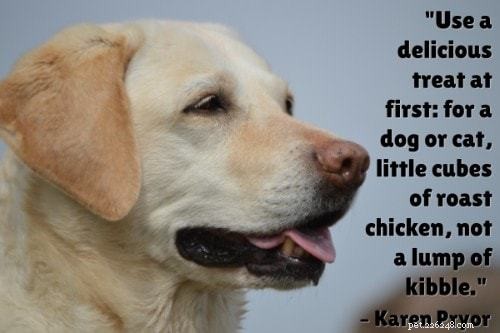
81. Know the proper clicker training procedure. “Push and release the springy end of the clicker, making a two-toned click. Then treat. Keep the treats small. Use a delicious treat at first:for a dog or cat, little cubes of roast chicken, not a lump of kibble.” – Karen Pryor, Fifteen Tips for Getting Started with the Clicker, Karen Pryor Clicker Training; Twitter: @karen_pryor
Check out our list of the Best Dog Training Treats for the perfect treats to use for clicker training.
82. A clicker isn’t a remote. “Do not point it at your dog. Instead put your hand behind you back or keep it to your side and click whenever your pet is doing the right thing. Dogs are visually oriented animals, this means that they will use any body cue you give them. You want them to respond to the ‘sound’, not your arm movement!” – 23 Free Dog Clicker Training Tips for Best Results , Dog Training Excellence; Twitter: @DogExcellence
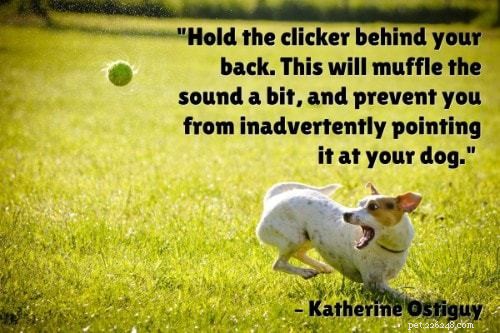
83. If the clicker scares your dog, find a way to soften it. “Hold the clicker behind your back. This will muffle the sound a bit, and prevent you from inadvertently pointing it at your dog. (Remember, it’s not a remote control!) If that’s not enough, you can wrap the clicker in layers of soft fabric to muffle the sound even more. One of my clever clients wrapped her clicker in baby socks. Every few days, she could take one sock off, so the sound gradually became a bit louder. It worked perfectly! After a couple of weeks, they were able to take the socks off the clicker and click ‘normally.’ You can also try these techniques with a ‘clicky pen‘ (one with a button on the end that you have to ‘click’ to start writing and ‘click’ to stop) and see if your dog is more tolerant of that. If she is, use that for the first couple of weeks and then reintroduce the clicker.” – Katherine Ostiguy, Fear of the Clicker:How to Train Your Dog Through It , Spring Forth Dog Academy; Twitter: @springforthdog
84. Start by charging up the charger with you dog. “Click the clicker once (in-out) and give your dog a treat (press on the end of the metal tab that does not have the dimple). Hint:Use something your dog really likes at first. Small pieces of yummy food (dog cookies, hot dogs, cheese) are best because the dog can enjoy it and be ready for the next thing quickly. Repeat this until your dog reacts to the clicker (by startling, pricking her ears, or suddenly looking for the treat). If she does, you’re ready for the next step… Hint:Try to keep your timing random (1-5 seconds between one click-and-treat time and the next). Technical Note:This is called ‘establishing a secondary reinforcer’ but most people call it ‘charging up the clicker’! Remember, click first, then treat.” – Stacy Braslau-Schneck, Get Started With Clicker Training, Wag’n’Train
85. Treats mean reinforcements. “Every time you click, deliver a reinforcer, ideally within 1-2 seconds of the click, especially for beginner dogs. Think of the clicker like your dog’s paycheck – clicking without treating is like having your paycheck bounce at work…would you go back to work on Monday?” – Dogster HQ, Dog Clicker Training Basics , Dogster; Twitter: @dogster
86. Work on your timing. “Much of clicker training is mechanical skills, such as food delivery and clicker timing. You can work on improving your timing and accuracy without your animal. For example, watch the news and try to click whenever anyone says the word ‘today.'” – Mary Hunter, 10 Tips to Improve Your Clicker Training, Stale Cheerios; Twitter: @cheeriotrainer
87. Every click is a treat. “Once you’ve charged the clicker, never click without giving your dog a reward. Clicker training depends on your dog trusting that a reward will come when he hears the marker. If you’re inconsistent, your dog won’t make an effort to remember the behavior that prompted the click.” – Tips for Successful Clicker Training , Raising Spot
88. The clicker is an audible alert letting your puppy know what’s coming. “So the clicker just lets your dog know that they did what you wanted them to do and it also lets them know that a treat is coming, because we’re going to be doing positive reinforcement training today.” – Clicker Training for Dogs:Wag! 2-minute Training Treats , The Daily Wagger; Twitter: @WagWalking
89. In the beginning, click for everything. “At first, you will be ‘clicking and treating‘ for any desirable behavior you see – such as when your puppy sits down, lays down quietly, comes to you when you call his name, etc.” – All About Puppy Clicker Training, Fido Savvy
90. Use clicker training consistently and your dog will be able to learn more. “Clicker training at the beginning is an example of classical conditioning. If used consistently it can become operational conditioning, where the dog intentionally repeats an action to gain a reward. The difference might seem minor but it has big implications on the behavior of your dog. If your dog is performing actions with a purpose rather than by habit he’s going to retain much more information.” – Jen Gabbard, How to Get Started With Clicker Training Your Dog , Puppy Leaks; Twitter: @puppyleak
91. A prática leva à perfeição. “Stand next to a table. Place a clicker on the table where your right or left hand can reach it comfortably without your looking. Now, in your right or left hand (the one away from the clicker side), hold a bunch of keys, a ball, or some other fairly dense object. When ready, hold the object straight out from the shoulder, drop the object, reach for and grasp the clicker, click AS THE OBJECT STRIKES THE GROUND. Don’t click before or after. If you can, have someone else watch and judge your timing, or videotape. As a variation, when you get good (10 out of 10), begin to lower the dropping hand to shorten the time between release and hitting the floor. That is just a start. When you get that down pat, switch the hand that drops the object to the CLICKING HAND. Thus, if you click with the right hand, hold out the right hand with the object, drop it, reach with that same hand to get the clicker and click just as the object hits the ground. When you can do that 8 out of 10 times you are pretty good.” – Bob Bailey, Improving Timing , Clicker Solutions
92. Don’t speak. They know just what you’re saying. “One of the easiest things to start with is to teach them to touch an obvious target, like a mat on the floor, a ball on a stick or your hand. As your pet approaches the target, click and treat. You don’t have to wait until they touch it because you’re shaping their behavior and rewarding small steps towards the end goal. At this stage let the clicker speak for itself – if you say anything it could be distracting.” – Clicker Training Your Pet , Blue Cross for Pets; Twitter: @The_Blue_Cross
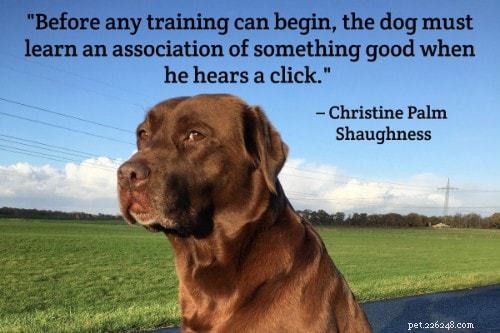
93. Keep charging your clicker during training. “One of the biggest problems with clicker training is the lack of understanding of why and how to use the clicker. I recently met a novice trainer who didn’t know that the clicker needed to be ‘charged,’ that is, before any training can begin, the dog must learn an association of something good when he hears a click. After all, the sound of the click by itself is meaningless. ‘Charging’ the clicker involves simply clicking and immediately giving the dog a high value treat. Click and treat, click and treat. Do this about 20-30 times. The dog is sure to learn that whenever he hears the click, it’s a good thing!” – Christine Palm Shaughness, Clicker Training for Dogs, Capers for Canines (and Other Animals)
94. Clicker training is so much faster. “An advantage to using the clicker is that the reward is instantaneous. You can press the clicker much more quickly than you can give the dog a treat or even say ‘good boy.’ As soon as the dog starts the good behavior, immediately click. That way, it’s completely clear to the dog what you are rewarding.” – Megan Smith, Clicker Training Pros &Cons , Daily Puppy; Twitter: @DailyPuppy

95. The more advanced the technique, the more skilled your clicking will need to be. “Clicker training (or marker training) does require a lot of knowledge and practice. It mostly depends what you are up to. With basic exercises you can get away with not such great timing, however with more advanced exercises it is important that you have a good eye-hand coordination.” – Mario Ancic, Pros and Cons of Clicker Training , Training Your Dog and You
96. Don’t ignore any bad behaviors during clicker training. “How to eliminate behaviors you don’t like:Establish a ‘no reward’ signal, like ‘oops’ or ‘too bad.’ Positively reinforce an incompatible behavior (a reliable ‘sit’ will prevent your puppy from jumping up). Time-outs:Immediately after a misbehavior, turn away and ignore the puppy for 30 seconds to a minute.” – Clicker Training – First Steps , Animal Hospital of North Asheville; Twitter: @AHNApets
97. Click even for small progress. “Click when the animal offers small steps in the right direction. Animals learn most behaviors in small steps; they do not have to perform the behavior perfectly at first. Be patient and upbeat when teaching your pet.” – Clicker Training, Amazing Animal Tricks
98. Transitioning away from food rewards. “What many people do not realize about dog clicker training is that the ultimate goal is to be able to get certain behaviors from your dog reliably without having to have a clicker and a treat bag in your hand. It is important to learn how to transition away from dependence on the clicker system once a behavior is learned and you have added distance, duration and distraction. […] Return to a food reward refresher from time to time:This helps keep your dog sharp on behaviors that you have trained. There is no harm in practicing well known behaviors with a rapid reward in the context of a training session. This will only help your dog stay confident in a training session as well as keep them sure about commands they learned long ago.” – Mat, Clicker Training Basics 7 Insanely Actionable Steps , Wiley Pup; Twitter: @wileypupwebsite
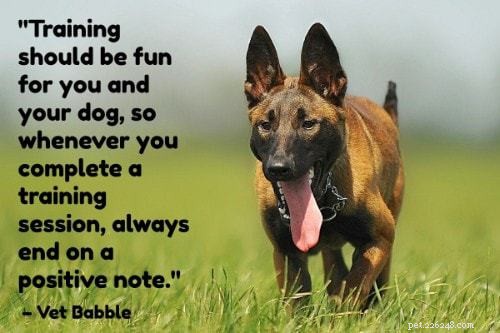
99. End on a high note. “Training should be fun for you and your dog, so whenever you complete a training session, always end on a positive note. If you are both getting frustrated, ask your dog to do something he knows how to do and reward him for that. Never end on a failure. The following video has some great training advice and features the clicker and how to shape behaviors.” – Cool Dog Tricks To Teach Your Furry Friend , Vet Babble; Twitter: @VetBabble
100. Worst case scenario is it won’t work if not done properly. “Clicker training is recommended by the American Veterinary Society of Animal Behavior as well as the Humane Society of the United States. There are no negative side effects. The worst that can happen is training will be ineffective if applied incorrectly.” – Clicker Training Basics , Fortunate Fido
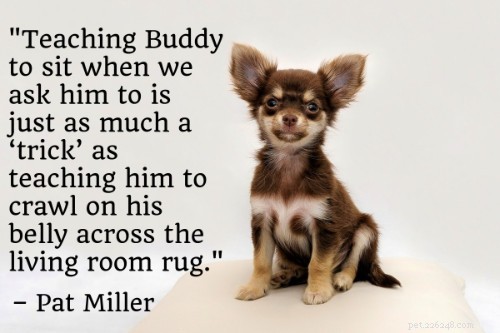
101. It’s all tricks! “Positive trainers have a saying that I love. We like to remind our clients that, ‘It’s all tricks!’ Teaching Buddy to sit when we ask him to is just as much a ‘trick’ as teaching him to crawl on his belly across the living room rug. They are both simply behaviors that Buddy is physically capable of doing, that we teach him to offer us in response to a verbal cue or hand signal. If we can change our attitude and remember to have fun teaching the basics as well as the tricks, we can have a dog who performs the serious behaviors with just as much enthusiasm as he does when he rolls over or catches a treat off the end of his nose.” – Pat Miller, Clicker Training and Trick Training Your Dog , Whole Dog Journal; Twitter: @WholeDogJournal
Need more training advice? Make sure to check out our helpful pet training articles.
Check Out These Resources and Products for Clicker Training your Puppy:
- The Wonder of Clicker Training:The Complete Guide to a Nonviolent, Positive, Compassionate, &Effective Way of Dog Training with Clickers
- Understand THIS and Your Dog Will Learn Faster (How to Achieve Perfect Timing!)
- Clicker Training 101
- Super Cooper Sunday #2 – Clicker Training Explained (Golden Retriever Puppy)
- Best Pet Clicker Trainers
- Clicker Training for Dogs
- Is There Something Special About Clicker Training for Dogs?
- Clicker Training Dogs
- A Simple Guide on How to Train Your Dog:Use Clicker Training to Teach Your Dog to Walk on a Leash, Sit, Stay, Go to Potty and Obey Your Commands
- EcoCity 2018 Pet Training Clicker Set (4 Pack)
Featured Image Credit:Ivanova N, Shutterstock
- Comportamento Animal
- Raças de Animais
- Nomes de Animais
- Adoção de Animais
- Treinamento de Animais
- Informações de Animais
- Saúde Animal
- Animais Adoráveis
- Cães
- 7 perguntas comuns sobre gatos Sphynx:respondidas
- Os gatos podem comer tangerinas? Razões incríveis para aprender sobre isso
- Os melhores paus de valentão
- Vômito de sangue em cães:o que pode estar causando isso?
- Que outros animais de estimação se dão bem com cães?
- Por que os gatos amassam seus donos?
- Tipos de Pitbull